

A child was walking along a beach after a storm and found it covered in starfish. Upset at the sight, the child started putting them back in the water one by one. An old man came up and said, “What are you doing? There are thousands of starfish-way too many to make a difference.” The child looked at the old man, picked up a starfish, put it in the ocean, and said,. “It made a difference to that one”.
If we all do something, such as stop using cosmetics containing oxybenzone or reduce the use of plastic, it will make a difference
What are plankton?
Plants (phytoplankton) and animals (zooplankton) are included in the term plankton, which comes from the Latin word for “ocean drifter”. Copepods are zooplankton from the Subphylum Crustacea; there are 13,000 Copepod species; and this is also the name of our research vessel. We are the only Copepod yacht in the world.
Our vision and mission is to restore the health of our oceans, mitigate climate change, and return our planet to its natural state prior to the Chemical Revolution, which began in the 1950s with the production of toxic chemicals and plastic.
Marine plankton are the planet’s lungs, but we have polluted the oceans and poisoned more than half of all life. Currently, plankton is dying at a 1% annual rate; by 2045, nearly 90% will be gone. We will also lose all whales, birds, and seals, as well as the food supply for 3 billion people. We will have runaway climate change because the plant’s life support system will be destroyed. The GOES Foundation’s mission is to eliminate microplastics, partially combusted carbon, and toxic chemical pollution from the oceans.
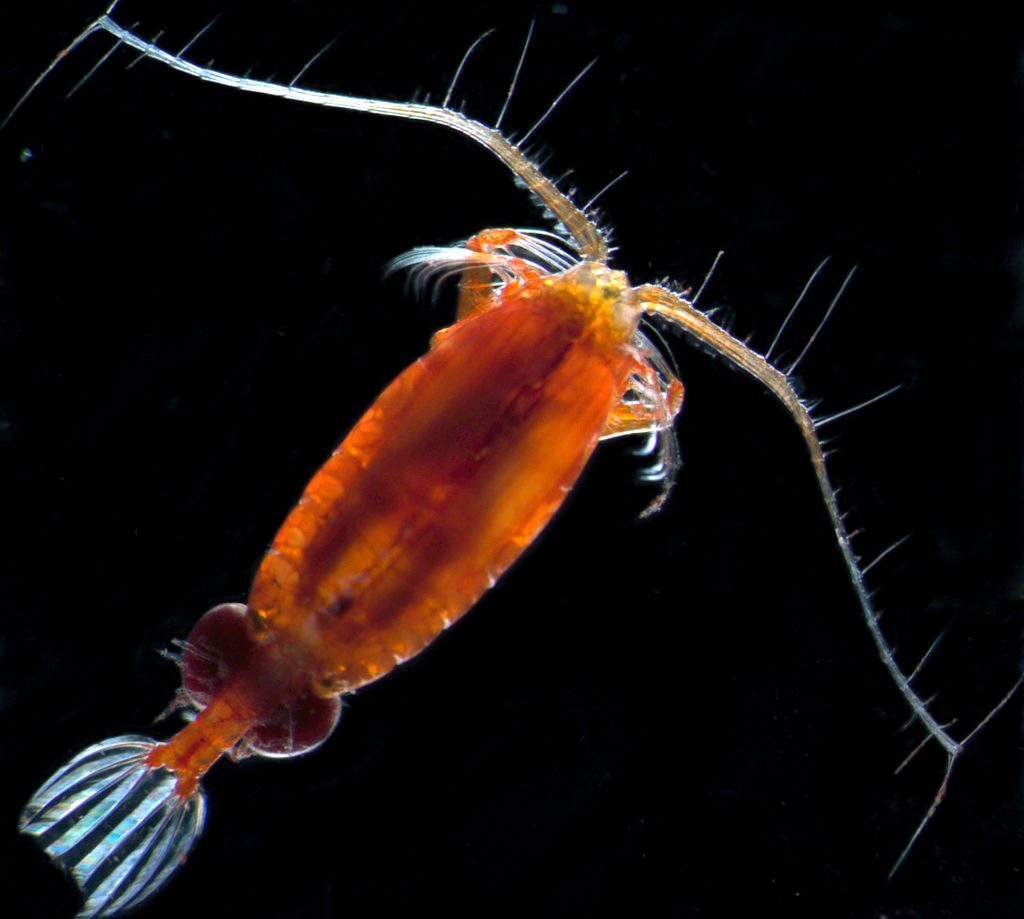
Few people have heard of marine Copepods, which are tiny marine insects measuring about 1mm in size. They are the most numerous animal on the planet, with more mass than all terrestrial animals combined; they are the greatest Carbon Bank, and our best hope for preventing climate change.
Copepods

sunscreen, pharmaceuticals, care tyres, plastic, herbicides, pesticides, PCBs, PBDE
When it comes to our planet’s deteriorating health, the dominant focus has been on rising carbon dioxide levels caused by the use of fossil fuels. We must reduce carbon emissions while also eliminating toxic chemical pollution. The oceans are the planet’s lungs, but since the 1950s and the production of herbicides and pesticides, the oceans have been suffocating under a toxic chemical cocktail. Every type of household cleaner and personal care product contains marine toxic chemicals. Thousands of different toxic chemicals are now being manufactured around the world, killing plankton and impeding their ability to produce oxygen and remove carbon dioxide from the atmosphere.
IF WE HAD NOT POISONED THE OCEANS, WE COULD HAVE PREVENTED CLIMATE CHANGE.
It is impossible to overestimate the importance of marine plankton in the maintenance and now precarious balance of life on Earth. We can all see the loss of phytoplankton, the decrease in oxygen production, and the well-documented CO2 increase. Our oceans are already becoming more acidic, and climate change is accelerating much faster than predicted. Oils and surfactants produced by marine plankton form the SML surface micro layer, which regulates water evaporation. The primary GHG is water vapour in the atmosphere, which accounts for 70% of all GHGs greenhouse gases. CO2 is a minor gas.
WE MUST RESTORE OUR OCEANS.
It’s not just about saving whales and dolphins; we can’t live if we continue to poison them. If we do not address this, they will become too acidic, resulting in a cascade failure of the global ecosystem. Life on Earth will become impossible unless you have an oxygen tank strapped to your back! We will reach this tipping point within the next 25 years if current rates of decline continue. Unless we act now, it will happen quickly and irreversibly, resulting in runaway climate change and mass starvation on a global scale.
THE GOOD NEWS
If we consider all terrestrial life on land, it takes approximately 60 years to double in mass and lock out carbon. The majority of terrestrial ecology is in balance; for example, when a tree grows, it removes carbon dioxide from the atmosphere, but when it dies, it releases the same amount of carbon dioxide back into the atmosphere. As a result, mature forests like the Amazon are carbon neutral, unless they are cut down and burned, in which case they add about 10% to the world’s carbon budget.
Only out-of-balance ecosystems, such as marshlands, wetlands, peat bogs, and mangrove swamps, sequester carbon. All terrestrial carbon sequestration occurs in these environments.
The deep ocean is by far the largest carbon bank on the planet. When marine life dies, it falls into the abyss and is trapped for thousands of years. The good news is that most marine life is less than 1mm in size and has a doubling time of only three days.
If we remove the toxic brakes on marine life, the oceanic ecosystems and all marine life will recover quickly.
Universal sea change necessitates global participation. AND it’s simple for you to assist. Whether you’re in a position of power, sailing the seas, or simply want to change a few bad purchasing habits and help protect the world you live in, it’s time to make a change — go non-toxic!
The GOES Foundation is acting quickly to lead the necessary and universal action required to address climate change. We are working around the world to stem the toxic tide that is polluting our oceans.
GOES involves people and organisations at all levels of society, from children to world leaders and daring adventurers who sail across the oceans at high and low latitudes to collect plankton samples.
GOES employs all available digital technology and artificial intelligence (AI) tools to demonstrate the urgent need to eliminate all toxic chemicals, hazardous waste, and plastics from homes and industry.
We should simply stop using highly toxic chemicals as a precautionary measure or as a reality check. GOES will collect thousands of samples in order to provide irrefutable evidence to policymakers, allowing them to make faster decisions and get these chemicals out of our lives.
Copepod photo of the Ria Formosa in Southern Portugal, one of the last remaining sea-horse sanctuaries
