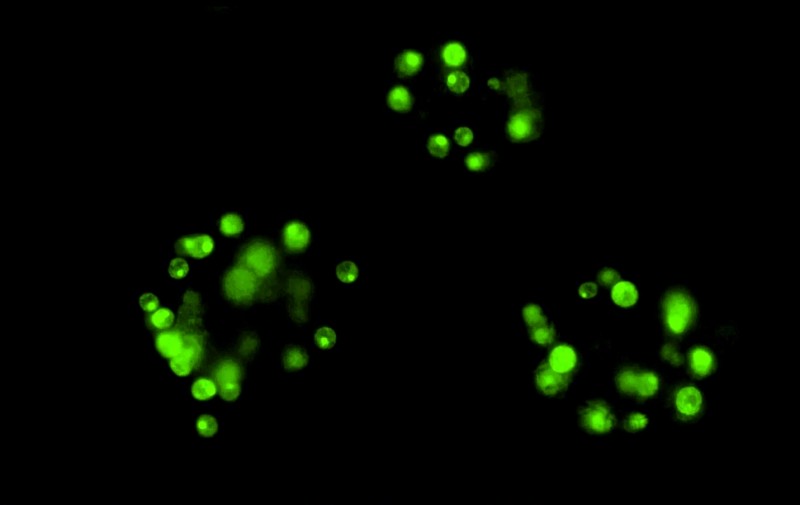
Marine plankton formed our atmosphere, and the lack of them is destroying the climate.
Goesfoundation.com measured 1 to 10 plastic fibres and 100 to 1000 particles of partially combusted carbon in every litre of surface water across the Atlantic Ocean at 15 deg N. The sample resolution was 20 microns, the sample volume 500 ml.
5000 samples by 30 yachts all showed the same number of plastic particles and carbon particles. There should also have been at least 1 zooplankton animal in every sample; the numbers were less than 1 in 80 litres of water.
https://lnkd.in/ev6_2cXN
In a recent report published in Nature, data from thousands of seawater samples reveal anthropogenic chemicals as a pervasive component of marine organic matter and the vast chemical footprint of human activity in the ocean. The image depicts the spread of xenobiotics through marine ecosystems, visualising how human-made organic substances have become embedded within the ocean’s chemistry.
https://lnkd.in/ek3uzkrY
Zooplankton and protists will eat the particles of plastic and carbon; we know that the concentration of lipophilic chemicals from the surface of water are concentrated hundreds, if not thousands, of times on the hydrophobic particles. The organisms cannot tolerate this toxic load; this is why 25% of the world’s oceans are now dead (HNLC) zones. https://lnkd.in/e6xMQXKs).
The dead zones are spreading across all oceans. Phytoplankton diatoms and coccolithophores produce oil, an omega-3 that prevents water evaporation from the oceans. DMS produced by the plankton forms clouds. There is a massive regime shift away from these phytoplankton in all the world’s oceans, which has resulted in a 10% increase in humidity and drop in cloud formation since the 1970s. This is why we have climate change; carbon dioxide is only responsible for a small part.
Given the current loss of marine life, spread of HNLC zones and ocean acidification, we now expect to see trophic cascade collapse leading to a complete regime shift over the next 15 years, which will result in the loss of most whales, seals, birds, fish and food supply for 3 billion people. This will make climate disruption look like a walk in the park.
While terrestrial plants are super important, 71% of the planet is covered by ocean, and it’s responsible for 80% plus of biogenic aerosols, humidity and cloud formation. If we do not address these issues, then nothing else really matters.
A modified version of Prof. Salter’s seawater aerosol system also has the potential to work and buy us some time to regenerate nature / ecosystems. I think it is wrong to call it cloud brightening; it is better described as biomimicry, especially if we also include oil, iron and silicates in the seawater aerosol.